
Pharmaceutical Serialization: Definition, Requirements, Process & Implementation Guide
Pharmaceutical serialization is the process of assigning a unique identifier to every saleable unit of a drug product so it can be tracked from manufacturing through dispensing. This guide walks through how it works: combining a product identifier, a lot number, and an expiration date into a 2D data matrix, then reporting the movement of that unit as it changes hands across the supply chain. It exists to stop counterfeit products from reaching patients and to give manufacturers, distributors, and regulators a shared, verifiable record of where every unit has been.
That’s the short version. The rest of this guide covers what serialization actually requires operationally, how it differs from aggregation and traceability, the regulations driving it, and what a working implementation looks like in practice.
What Is Pharmaceutical Serialization?
Serialization means giving each package of a drug product, down to the smallest saleable unit, a unique serial number that no other unit on earth shares. That serial number, combined with the product’s GTIN, lot number, and expiration date, gets encoded into a 2D DataMatrix barcode and printed on the package.
Once that code exists, every event involving that unit, commissioning, shipping, receiving, dispensing, gets reported so a full chain of custody can be reconstructed at any point.
This is different from a batch or lot number, which identifies a production run shared by thousands of units. Serialization operates at the unit level. It’s the difference between knowing “this batch shipped to these distributors” and knowing “this exact bottle went to this exact pharmacy.”
The practical effect is that a regulator, a distributor, or a pharmacist can scan a single package and verify it’s authentic, in date, and hasn’t been reported stolen, diverted, or recalled.
Why Pharmaceutical Serialization Matters
Serialization isn’t a compliance exercise for its own sake. It exists because counterfeit and diverted drugs cause real harm, and because supply chains got too complex to track manually.
- Patient Safety and Counterfeit Drug Prevention – Counterfeit medicines have entered legitimate supply chains through compromised wholesalers, repackagers, and cross-border diversion. A unit-level serial number lets any party in the chain verify a package against the manufacturer’s record before it reaches a patient. If the code doesn’t match, doesn’t exist, or has already been reported dispensed elsewhere, that’s a signal to stop the transaction and investigate.
- Faster and More Precise Recalls – Without serialization, a recall often means pulling an entire lot, sometimes hundreds of thousands of units, because there’s no way to isolate exactly which packages are affected. With serialized data, a manufacturer can identify the specific units tied to a defect, trace exactly where they were shipped, and issue a recall that’s targeted instead of blanket — the same principle behind targeted, traceability-driven recalls. That difference matters both for patient safety and for the cost of the recall itself.
- Supply Chain Visibility – Serialization creates a data trail that shows where a product actually is, not where it’s assumed to be. That visibility helps manufacturers spot diversion, identify slow-moving inventory, and confirm that product reached the market it was intended for rather than being redirected to a gray market.
- Regulatory Compliance – In most major markets, serialization isn’t optional. The US, the EU, and a growing list of countries have made unit-level traceability a legal requirement for selling prescription drugs. Non-compliance can mean products held at customs, fines, or loss of market access.
Serialization vs Aggregation vs Traceability
These three terms get used interchangeably, which causes real confusion for teams trying to scope a project or evaluate a vendor. They’re related but distinct – see the difference between serialization and track-and-trace for a deeper breakdown, and our overview of traceability systems for the pharmaceutical industry for how they fit together operationally.
| Term | What it means | What it answers |
|---|---|---|
| Serialization | Assigning a unique serial number to each saleable unit and encoding it in a barcode | “What is this specific unit?” |
| Aggregation | Linking serialized units to the cases and pallets they’re packed into, creating a parent-child hierarchy | “Which units are inside this case or pallet?” |
| Traceability | The end-to-end system of tracking and reporting the movement of serialized units and their aggregated hierarchies across the supply chain | “Where has this unit been, and where is it now?” |
How Pharmaceutical Serialization Works
Serialization is a sequence of operational steps, not a single system. Each step depends on the one before it, and a failure anywhere in the chain creates downstream exceptions.

Master Data Setup
Before any code gets printed, product data has to be correct and consistent: GTINs, packaging hierarchies, National Drug Codes or equivalent identifiers, and the relationships between each packaging level. Errors introduced here (a wrong GTIN, a missing hierarchy level) surface later as failed verifications or rejected shipments, often long after the root cause is buried.

Serial Number Generation and Management
Serial numbers have to be generated, allocated to production lines, and tracked so no number is ever reused or duplicated across markets. For companies working with CMOs, this also means deciding who issues numbers and how pools get transferred and reconciled.

Printing and Marking
The serial number, GTIN, lot, and expiration date get encoded into a 2D DataMatrix and printed directly on the package during the packaging run, at line speed, without slowing throughput.

Vision Inspection and Verification
Immediately after printing, a vision system reads the code back to confirm it’s legible, correctly formatted, and matches the intended data. A code that fails this check has to be rejected before it leaves the line, not caught downstream at a distributor.

Aggregation
Individual units get linked to the cases and pallets they’re packed into. This step is where a large share of operational exceptions originate: a case gets opened for a defective unit, a pallet gets rebuilt, and the hierarchy has to be corrected without losing the audit trail.

Data Exchange and Reporting
Serialization and aggregation events get reported, typically in EPCIS format, to internal systems, trading partners, and in some markets, government repositories. This is where CMOs, 3PLs, wholesalers, and regulators all need to receive consistent, correctly formatted data on time.

Distribution, Dispensing, and Decommissioning
As product moves through distribution and eventually reaches a pharmacy or hospital, each serialized unit gets verified and ultimately decommissioned when dispensed, removing it from active circulation in the traceability system.
Pharmaceutical Serialization System Architecture
Serialization systems are typically described in layers, from the physical packaging line up through enterprise-level reporting. Understanding these layers matters when evaluating a vendor or scoping an internal project, because gaps often show up at the boundaries between layers rather than within any single one.
L1-L5 Serialization Levels Explained:
- L1: The physical equipment on the packaging line, printers, cameras, and sensors that mark and verify each unit.
- L2: The line controller that coordinates L1 devices and manages the packaging line’s local logic.
- L3: The site-level system that manages serial number pools, line orchestration, and site-wide production data across multiple lines.
- L4: The enterprise-level serialization and traceability system that manages compliance reporting, master data, partner data exchange, and regulatory submissions across the entire company.
- L5: Coordination across an entire network of manufacturing sites, CMOs, and markets, often relevant for larger manufacturers or CDMOs managing multiple clients.
Most compliance obligations live at L4. This is the layer that talks to regulators, trading partners, and government repositories, and it’s usually the layer companies are evaluating when they talk about “switching serialization providers” – see why an L4 provider matters for what to look for at this layer specifically.
Laid out as a stack, the flow of data and control runs from the physical package up to the enterprise:
Network Coordination
Multi-site / multi-CMO orchestration, cross-client visibility.
Enterprise Serialization
Compliance reporting, master data, partner data exchange.
Site Management
Serial number pools, line orchestration, site production data.
Line Controller
Coordinates line-level devices, local line logic.
Line Equipment
Printers, cameras, sensors: marks and verifies each unit.
Data and serial number pools flow upward from the physical line to the enterprise system. Compliance instructions and reporting requirements flow back down. A break at any layer, a misconfigured printer at L1, a site system that isn’t reconciling pools at L3, shows up as a failure at the layer above it, which is why troubleshooting a serialization exception often means tracing the problem down through the stack rather than assuming it originates at L4.
Glossary: Terms Worth Knowing
GTIN (Global Trade Item Number): The GS1 standard identifier for a specific product and packaging configuration.
GLN (Global Location Number): A GS1 identifier for a physical location or legal entity involved in the supply chain, such as a manufacturing site or distribution center.
SSCC (Serial Shipping Container Code): A unique identifier assigned to a logistics unit, such as a pallet, used in aggregation.
EPCIS (Electronic Product Code Information Services): The GS1 data standard used to capture and share serialization and traceability events between trading partners.
VRS (Verification Router Service): A DSCSA-driven system that routes product verification requests between trading partners without requiring a centralized database.
Commissioning: The event that links a physical serialized unit to its digital record for the first time, typically at the point of printing and verification.
Decommissioning: The event that removes a serialized unit from active circulation in the traceability system, typically at dispensing, destruction, or export.
Systems That Need to Integrate
A working L4 system doesn’t operate alone. It typically needs to exchange data with ERP systems for master data, MES or line-level systems for production events, and external partners including CMOs, 3PLs, wholesalers, and government verification systems. Each integration point is a place where format mismatches, timing issues, or ownership ambiguity can create exceptions.
Key Pharmaceutical Serialization Regulations
Serialization requirements vary by country, but a handful of frameworks cover most of the global market.
U.S. DSCSA – The Drug Supply Chain Security Act (see also the FDA’s official DSCSA page) requires unit-level product identifiers, electronic tracing of transaction information as product changes ownership, verification of product at the package level, and secure storage of records. Full interoperable, unit-level traceability requirements have phased in over several years, with enforcement and data exchange expectations continuing to tighten. Trading partners are required to exchange this data electronically, commonly using EPCIS.
Related reading: DSCSA interoperability requirements and authorized trading partner requirements under DSCSA.
EU Falsified Medicines Directive – The EU FMD requires a unique identifier and anti-tampering device on prescription medicine packaging, along with verification against the European Medicines Verification System at the point of dispensing. Unlike DSCSA’s evolving unit-level tracing model, FMD is built around a centralized verification database that pharmacies check before dispensing. See our guides on how to comply with the Falsified Medicines Directive and FMD FAQs, as well as Italy’s transition from Bollino to EU FMD compliance for a country-specific example.
Other Global Requirements – A growing list of countries have their own serialization mandates, each with distinct data formats and reporting systems: Russia’s Chestny ZNAK (see also meeting the challenges of Russian track-and-trace compliance), South Korea, Saudi Arabia’s SFDA requirements, Turkey’s ITS system, and India’s requirements for pharmaceutical exporters (see also the 2022 Drugs Amendment Rules for active pharmaceutical ingredients), among others. For manufacturers selling into multiple markets, this means managing not one compliance framework but a portfolio of them, each with its own rules and deadlines.
Global Regulation Comparison – Requirements differ enough between markets that a compliance approach built for one country rarely transfers cleanly to the next. Here’s how the major frameworks compare at a high level.
| Market | Framework | Level of Traceability | Verification Model | Key Data Exchange |
|---|---|---|---|---|
| United States | DSCSA | Unit-level, interoperable tracing | Point-of-dispense and trading partner verification | EPCIS, electronic transaction information |
| European Union | Falsified Medicines Directive (FMD) | Unit-level identifier and tamper verification | Centralized check against the European Medicines Verification System at dispensing | National Medicines Verification Systems |
| Russia / CIS | Chestny ZNAK | Full unit-level tracking through the supply chain | Centralized government reporting system | Direct reporting to the national track-and-trace operator |
| Saudi Arabia | SFDA Track and Trace | Unit-level serialization | Government-mandated reporting | SFDA-specific data exchange requirements |
| Turkey | ITS (İlaç Takip Sistemi) | Unit-level serialization | Centralized national system | Real-time reporting to ITS |
| India | CDSCO export mandate, iVEDA | Unit-level serialization for exported product | Exporter-managed verification | Country-specific data formats for export markets |
| Brazil | SNCM (National Drug Control System) | Unit-level serialization | Centralized government database | ANVISA reporting requirements |
| Indonesia | BPOM Track and Trace | Unit-level serialization | Centralized government system | BPOM-specific reporting |
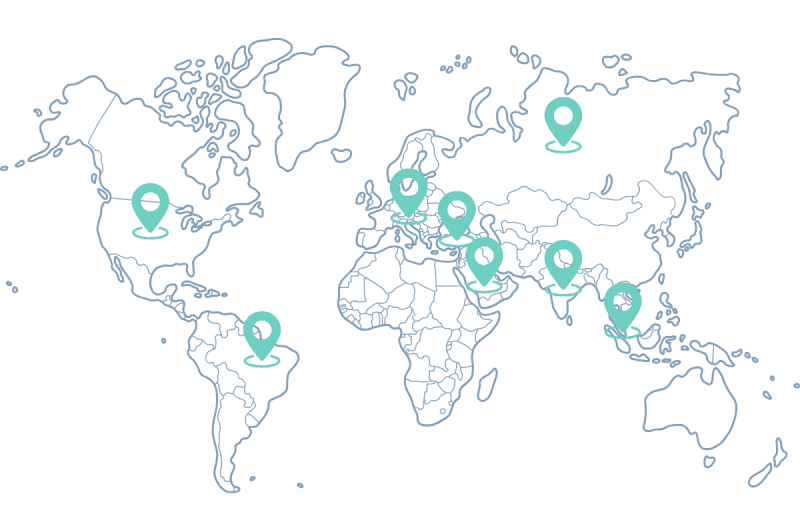
The pattern across all of these: unit-level serialization is close to universal, but the verification model, whether it’s centralized government reporting or decentralized trading-partner verification, and the data exchange format vary by country. A manufacturer selling into five markets is effectively managing five separate compliance obligations layered on top of one physical product.
For more information on pharmaceutical serialization regulations around the world, visit SoftGroup’s overview of pharmaceutical serialization regulations.
For a broader view of how these regulations have evolved, see our global pharmaceutical regulation timeline (2010–2023).
Benefits of Pharmaceutical Serialization
- Counterfeit Prevention – Unit-level identifiers make it possible to verify authenticity at any point in the supply chain, closing off the anonymity that counterfeit products rely on.
- Recall Efficiency – Targeted recalls based on serialized data protect patients faster and cost less than blanket lot recalls.
- Brand Protection – Manufacturers gain a documented way to demonstrate that their product, and only their product, reached the market, protecting against diversion and gray market activity that can damage both revenue and reputation.
- Inventory and Supply Chain Optimization – The data generated by serialization, beyond its compliance use, gives supply chain teams real visibility into where inventory actually sits and how it moves, which can inform planning and reduce write-offs from expired or misallocated stock. Companies that connect this data to broader supply chain visibility tools tend to catch diversion and slow-moving inventory patterns that a compliance-only view would never surface.
- Audit Readiness – A properly maintained serialization system produces the audit trail regulators and auditors expect on demand, rather than requiring a scramble to reconstruct records after the fact.
Common Challenges in Pharmaceutical Serialization
Poor Master Data Quality
Most serialization failures trace back to master data: incorrect GTINs, missing packaging hierarchy levels, or mismatched product attributes. These errors are cheap to fix at setup and expensive to fix once they’ve propagated through months of production data.
The reason master data errors are so costly is timing. A wrong GTIN entered during the initial setup won’t fail immediately. It fails weeks or months later, when a partner rejects a shipment or a verification request comes back with no match. By then, the error has been baked into thousands of serial number records, and correcting it means reconciling every affected unit rather than fixing a single field. Teams that treat master data validation as a one-time setup task, rather than an ongoing discipline with its own owner and review cadence, tend to be the ones surprised by these failures later.
Packaging Line Downtime
Printing and vision inspection have to run at full line speed. A serialization system that can’t keep pace becomes a bottleneck, and unplanned downtime on a packaging line has a direct, measurable cost.
Downtime in a serialized environment tends to come from a small set of recurring causes: a printer falling out of calibration, a vision system rejecting codes at a higher rate than expected, or a line controller losing connection to the site-level system mid-run. None of these are exotic failures. They’re the kind of routine equipment issues packaging teams have always dealt with, except now each one also stops serial number reporting, which means production can’t simply resume without confirming no gaps were introduced in the data. The operational fix is less about eliminating downtime entirely and more about making sure it’s caught immediately and the line can restart without a lengthy data reconciliation exercise.
Aggregation Errors
Rework, partial pallets, and case-level corrections are routine in packaging operations, but each one is an opportunity for the parent-child hierarchy to break. When it does, the result is often a shipment held at receiving until the discrepancy is resolved.
A common scenario: a damaged unit is pulled from a sealed case after aggregation is already complete. The case’s parent-child record now overstates what’s actually inside it. If that correction isn’t made in the system at the same time it happens physically, the mismatch surfaces later, often at a receiving dock hundreds of miles away, where a distributor’s system flags the discrepancy and holds the entire shipment rather than just the affected case.
Partner Data Exchange Failures
A malformed EPCIS file, a missed transmission, or a partner running an incompatible format can stall a shipment even when the physical product and packaging are correct. Data exchange reliability across CMOs, 3PLs, and distributors is often the least visible part of a serialization program and the most common source of daily operational friction.
These failures are rarely about any one party being at fault. They’re usually a symptom of two systems interpreting the same standard slightly differently, an optional EPCIS field one partner expects and another omits, or a timing assumption that doesn’t hold when volume spikes. Because the failure shows up as a rejected file rather than a clear error message, resolving it often takes longer than the underlying problem warrants, unless someone on the team has visibility into exactly which field or event type triggered the mismatch.
Validation and Change Control
Every change to a serialization system, a new market, a new packaging line, a software update, has to go through validation under GMP and 21 CFR Part 11 or Annex 11 requirements. Teams that treat validation as an afterthought end up repeating it under pressure every time something changes.
The teams that manage this well build validation into the change itself rather than treating it as a separate downstream task. That means having current IQ/OQ documentation, a defined change control process, and a validation partner or internal team that can turn around a revalidation quickly. The teams that struggle are usually the ones discovering, mid-project, that their documentation is out of date or that no one owns the validation relationship, which turns a routine change into a multi-week delay.
Overlooking Business Value
Many companies implement serialization purely as a compliance obligation and never use the data it generates for anything else. That’s a missed opportunity. The same data that satisfies a regulator can also flag diversion patterns, support supply chain planning, and speed up audit response.
In practice, this means the serialization data sits in a compliance system that supply chain, commercial, and quality teams rarely look at, even though it contains a detailed record of exactly where every unit went and when. Companies that connect this data to broader supply chain visibility tools tend to catch diversion and slow-moving inventory patterns that a compliance-only view would never surface.
Pharmaceutical Serialization Implementation Checklist
Use this as a starting point when scoping a new implementation or evaluating whether an existing setup is actually ready.
- Master data (GTINs, packaging hierarchies, product attributes) is complete and validated before go-live
- Serial number issuance and pooling logic is defined, including ownership across any CMO relationships
- Packaging line hardware (printers, vision systems) is qualified and integrated with the L3/L4 systems
- Data exchange formats and partner connections (CMOs, 3PLs, wholesalers) are tested with real transaction volume, not just sample files
- Compliance coverage is confirmed for every market the product ships to, not just the primary market
- Exception handling procedures are documented and assigned to a specific role
- Validation documentation (IQ/OQ, URS, functional specs) is complete and audit-ready
- A mock recall has been run to confirm the system can produce accurate results within a defined time window
- Team training is complete for everyone who will manage exceptions or respond to audits
A downloadable version of this checklist, the Pharma Serialization Readiness Checklist, is available for teams who want to score their own readiness before starting or switching vendors.
Serialization Across Roles in the Supply Chain
Serialization looks different depending on where you sit in the supply chain. The compliance obligation is often shared, but the day-to-day operational reality is not.
Manufacturer or Marketing Authorization Holder
The manufacturer or MAH typically owns the overall serialization strategy and carries ultimate compliance accountability, even when packaging is outsourced. That means owning master data, deciding how serial number pools are issued and shared with CMOs, and being the party regulators and trading partners hold responsible when something goes wrong. The operational priority here is end-to-end visibility across every site and partner producing product on the company’s behalf. For clinical-stage manufacturers preparing their first commercial lots, this priority shows up earlier than expected: the Clinical-to-Commercial Test Run Playbook covers what readiness looks like ahead of that first run.
CMO or CDMO
A contract manufacturer runs serialization on behalf of multiple clients, often on the same physical lines. The priority shifts to fast client onboarding, clean separation of serial number pools between clients, and minimizing line changeover time between production runs. For a CDMO, serialization reliability is increasingly a competitive differentiator: clients evaluating a contract partner look at how smoothly that partner has handled serialization for others.
Wholesaler or 3PL
Distributors and third-party logistics providers sit in the middle of the chain, receiving serialized product from manufacturers and shipping it onward to pharmacies and hospitals. Their operational concern is verifying incoming product against manufacturer data, maintaining chain-of-custody records as product changes hands, and flagging discrepancies before they pass a problem further down the chain.
Pharmacy or Hospital
At the point of dispensing, the priority is straightforward: verify that the unit being dispensed is authentic, in date, and hasn’t already been reported as dispensed or recalled. This is the last checkpoint before product reaches a patient, and it depends entirely on every upstream party having reported accurate, timely data.
Each of these roles depends on the others reporting clean, timely data. A weak link at any point, a manufacturer with poor master data, a CMO with unreliable pool management, a distributor that doesn’t verify incoming shipments, degrades the reliability of the entire chain, not just that one party’s piece of it.
Choosing Pharmaceutical Serialization Software or Partners
Core Capabilities to Look For
A serialization platform should cover product identifier generation, EPCIS-native data exchange, built-in compliance support for every market you sell into, aggregation and exception handling, and a validation package that doesn’t require a separate consulting engagement every time something changes. Fixed, predictable pricing also matters: per-serial-number fees and hidden support costs are common complaints from teams on legacy platforms, and they compound as volume grows.
Beyond the checklist basics, a few capabilities tend to separate platforms that hold up under real operating conditions from ones that only look complete in a demo.
Exception visibility. When a code fails verification or an aggregation hierarchy breaks, the team responsible needs to see it immediately, with enough context to resolve it, rather than discovering it through a support ticket days later. Ask to see what an exception actually looks like on screen, not just how the vendor describes handling it.
Compliance coverage that’s live, not planned. It’s common for vendors to describe a market as “supported” when what they mean is “on the roadmap.” The difference matters most for teams with a near-term expansion date, where a roadmap promise doesn’t help if a shipment is held at customs six months from now.
CMO and partner onboarding speed. For manufacturers working with contract partners, or CDMOs managing multiple clients, the time it takes to onboard a new partner or client onto the serialization system is a direct operational cost. A platform that requires weeks of custom integration work for each new partner will show that cost repeatedly.
Data ownership and portability. If the relationship with a vendor ends, whether by choice or by contract expiration, the manufacturer needs a clear path to retrieve historical serialization data in a usable format. This is worth confirming in writing before signing, not after a migration becomes necessary.
Support responsiveness under real conditions. Vendor support quality is hard to evaluate from a sales conversation. Reference customers, particularly ones who have gone through an audit or a live exception with the vendor’s support team, tend to give a more accurate picture than a demo.
Questions to Ask Vendors
- Which regulations does your platform support today, not roadmap items, but live capabilities?
- How is EPCIS data exchanged, and in what format?
- What does validation documentation include, and is it part of the base offering?
- How are exceptions surfaced, and how fast can our team resolve one without opening a support ticket?
- What does migration look like if we’re moving from an existing provider, and how is our historical data handled?
- How is pricing structured as our serial number volume grows?
- What happens to our data and audit trail if we end the contract?
- Can you provide a reference customer who has gone through a real audit or recall using your platform?
- How long does onboarding a new CMO or manufacturing site typically take, from contract to first production run?
- What’s included in support, and what triggers an additional cost?
Common Mistakes to Avoid
Treating serialization as a one-time IT project instead of an ongoing operational function is the most common mistake. Close behind it: underestimating the master data cleanup required before go-live, assuming aggregation will “just work” without accounting for rework and exceptions, and choosing a vendor based on price without confirming compliance coverage for every market on the roadmap, not just the current one.
Pharmaceutical Serialization FAQs
It’s the process of assigning a unique identifier to each saleable unit of a drug product so it can be verified and tracked through the supply chain.
It prevents counterfeit products from reaching patients, enables targeted recalls, and satisfies legal requirements in most major markets.
Unit-level product identifiers, electronic tracing of transaction information, package-level verification, and secure recordkeeping, exchanged electronically between trading partners.
Serialization assigns a unique identifier to each unit. Aggregation links those units to the cases and pallets they’re packed into, creating a parent-child hierarchy.
A 2D DataMatrix typically encodes the GTIN, serial number, lot number, and expiration date.
By setting up master data, generating and managing serial numbers, integrating line-level hardware, establishing aggregation and data exchange processes, and validating the full system under GMP requirements.
Through documented IQ/OQ protocols, user requirement specifications, and functional testing that demonstrate the system performs as intended and meets 21 CFR Part 11 or Annex 11 requirements.
By making it possible to verify a specific unit’s authenticity at any point in the supply chain, rather than relying on visual inspection or batch-level trust.
Poor master data quality, packaging line downtime, aggregation errors during rework, partner data exchange failures, and validation overhead every time the system changes.
A system that spans line-level printing and inspection, site-level orchestration, and enterprise-level compliance reporting and partner data exchange (commonly described as the L1 through L4 layers). If you’re currently on another platform and weighing a change, see what switching serialization software actually involves, including a look at TraceLink alternatives.
Conclusion: Serialization Is Now a Traceability Infrastructure
Serialization started as a response to counterfeit drugs and a handful of national mandates. It has become permanent infrastructure that every pharma manufacturer, CMO, and distributor has to maintain, not a project with an end date.
The companies that manage it well treat it as an operational discipline: clean master data, tested data exchange, clear ownership across CMO relationships, and a platform that can absorb new markets without a fresh integration project each time. The companies that struggle usually treated it as a one-time compliance build and are now managing the accumulated exceptions.
If you’re assessing where your own program stands, the readiness checklist above is a reasonable place to start. If you’re further along and specifically evaluating a switch, a migration, or expansion into a new market, that’s a more specific conversation, and one worth having before a compliance deadline forces the decision – see 5 signs it’s time to replace your serialization software and why you need to change your serialization software now if that’s the conversation you’re already having.
OPTEL’s pharmaceutical serialization software is built around the operational realities covered in this guide: EPCIS-native data exchange, built-in compliance coverage across major markets, and fixed pricing without per-serial-number fees. If a switch is already on the table, the Switch to VerifyBrand page walks through what that transition looks like in practice.