Why the 12-Digit NDC Is Costing Serialization and Packaging Teams Sleep
Start with the piece nobody wants to find out about in 2032.
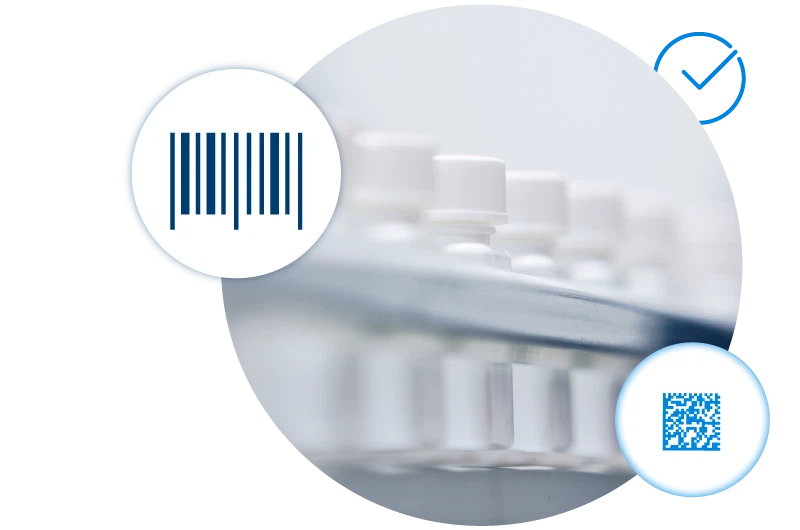
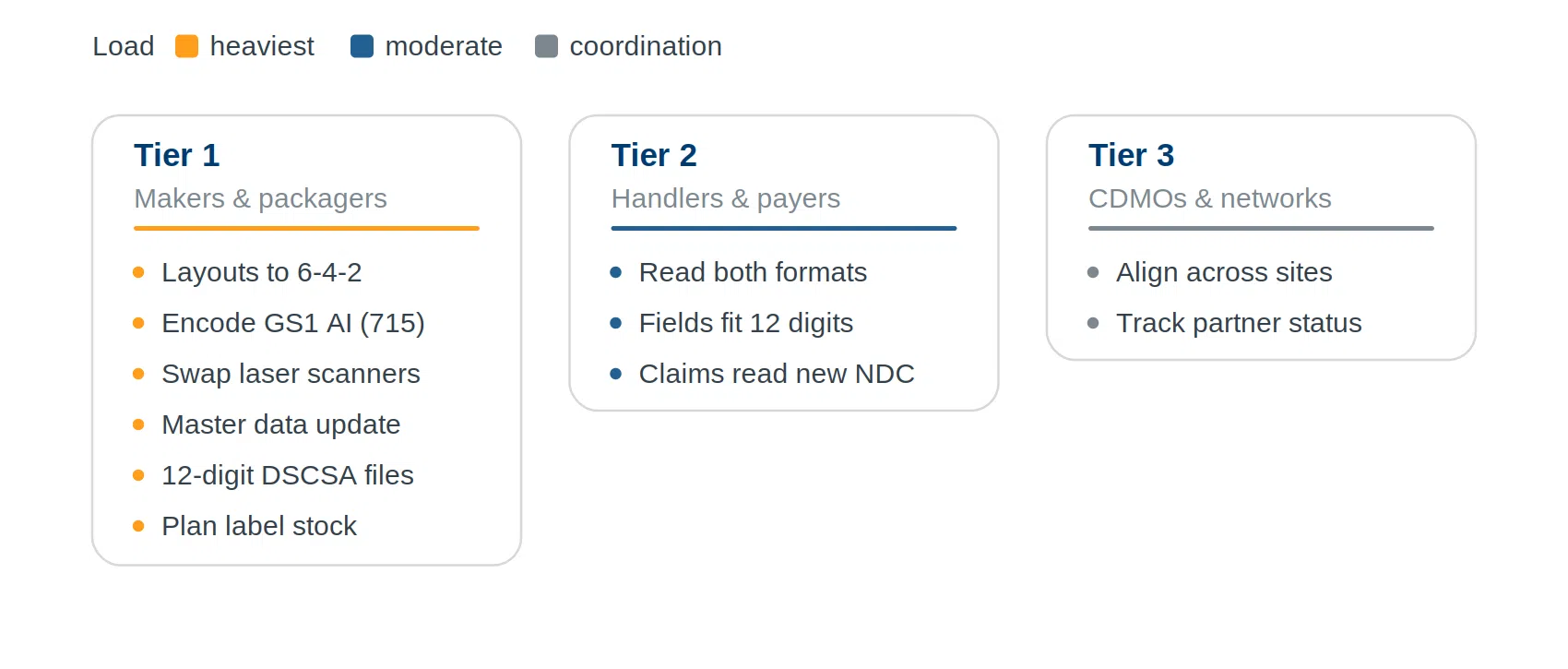
Some of your scanners will stop reading the code. A 12-digit NDC is too long for the GTIN-12 and GTIN-14 structures that pharmaceutical serialization has relied on. GS1 answered with a dedicated Application Identifier, AI (715), to carry the NDC in a barcode. The FDA revised its barcode rules (21 CFR 201.25) to allow 2D barcodes such as the DataMatrix*, which is where AI (715) lives. Here is the floor-level consequence: a barcode carrying AI (715) cannot sit in a UPC-A, and it can only be read by camera-based scanners. Traditional laser scanners will not read it. Any laser-only station that reads a drug barcode on your serialization line, or on your partners’ lines, becomes a capital replacement, not a software update.
*Possible formats: GS1 DataMatrix; GS1-128 (Commonly used for logistics, outer cases, and supply chain labels); GS1 DataBar; GS1 QR Code
Your optical setup might not be compatible. Even if you are currently using GS1 datamatrix, you might be encoding in a smaller size datamatrix. Typically, the information encoded is AI 01,21,10 and 17. Adding AI 715, which is 12 digits, to this format will most likely change the data matrix size. This also means that this new AI needs to be in human readable format. Layout templates might need readjustments and some optical setup might require hardware changes due to the size change. Don’t forget, typical labeler or carton stations use a 12.7mm print head and a 2.3 MP camera. A bigger data matrix could mean grading failures or print information overflow without an upgrade to the optical and printing hardware.

You have to run two NDC formats before you can run one. The change is meant to remove complexity. For years a single drug could carry the NDC in several 10-digit configurations (4-4-2, 5-3-2, 5-4-1), with an 11-digit version layered on top for reimbursement. One fixed 12-digit format ends that. The catch is the middle: through the transition window, your serialization systems, product master data, and quality checks all have to handle 10-digit and 12-digit NDCs at the same time.
However, the FDA already plans this in the transition. Every 10-digit NDC can be encoded with leading 0s to fit in the 12 digit format. For existing products, adding leading zeros to convert to the 12-digit format is not considered a “new” NDC assignment. The FDA automatically updates listed drugs in its electronic drug registration database. The FDA will not issue new NDCs starting with 0s to keep the old format compatible with this change.
The NDC lives inside your serialization stack, not just on the label. The identifier sits in serialization hierarchies, aggregation records, product master data, and the DSCSA outbound files you exchange with trading partners. Change the NDC and you touch layout configuration, track-and-trace data, barcode verification, and regulatory reporting, not only the printed carton.
Seven years is less runway than it looks. One product means a label revision, a layout update, a serialization configuration change, and a validation cycle. Multiply that across a full catalog. Teams with a few hundred SKUs have said the labeling work alone could consume the entire window. A portfolio in the thousands is a multi-year serialization program.
The part worth keeping in view: the FDA converts existing codes by adding leading zeros, and new labeler and product codes will not start with zero, so old and new never collide. It treats the conversion as an administrative change, not a new NDC, which removes the fear of pricing and rebate renegotiation. And the rule does not touch the 11-digit HIPAA format used for reimbursement. The identifier changes shape. The commercial contracts around it do not.