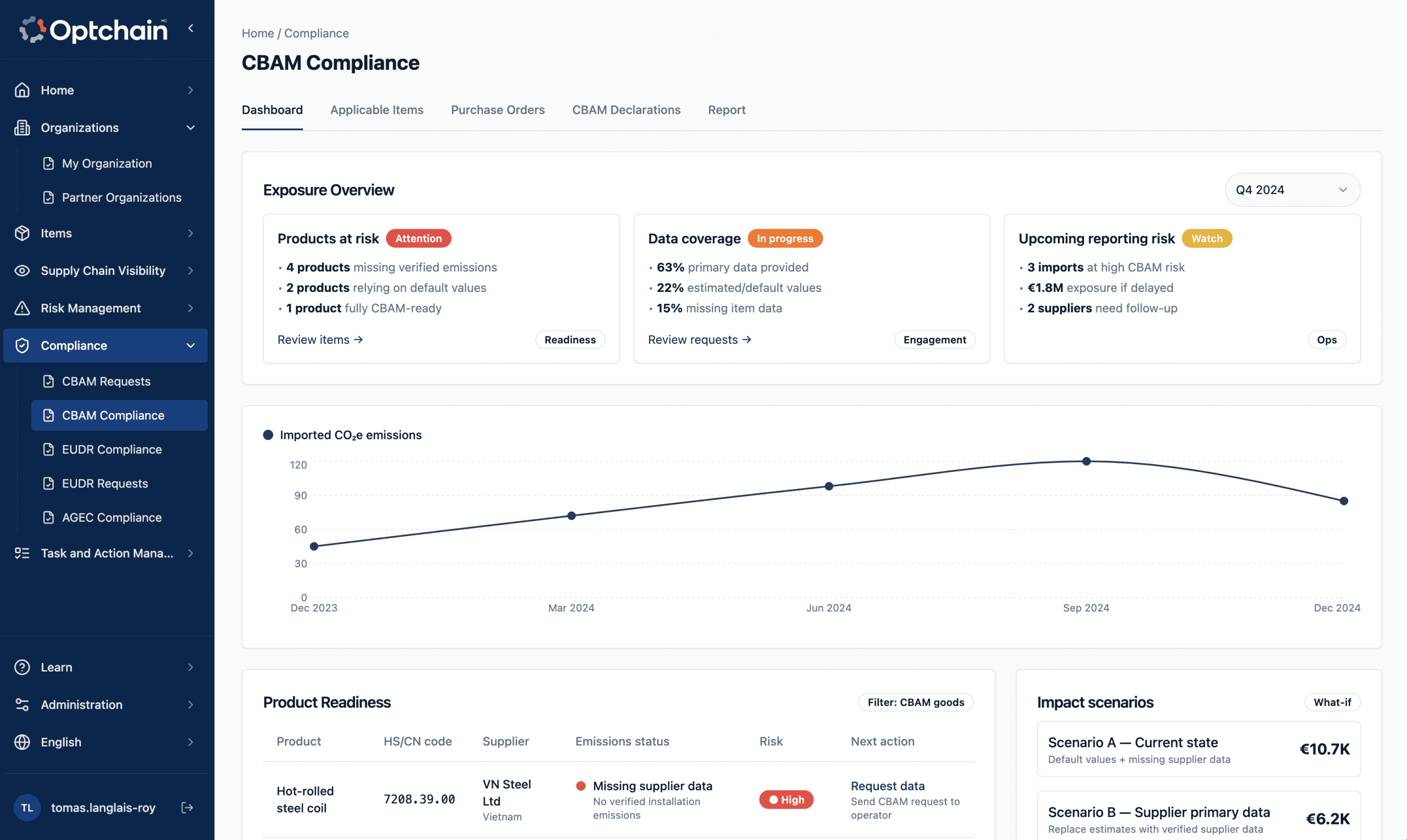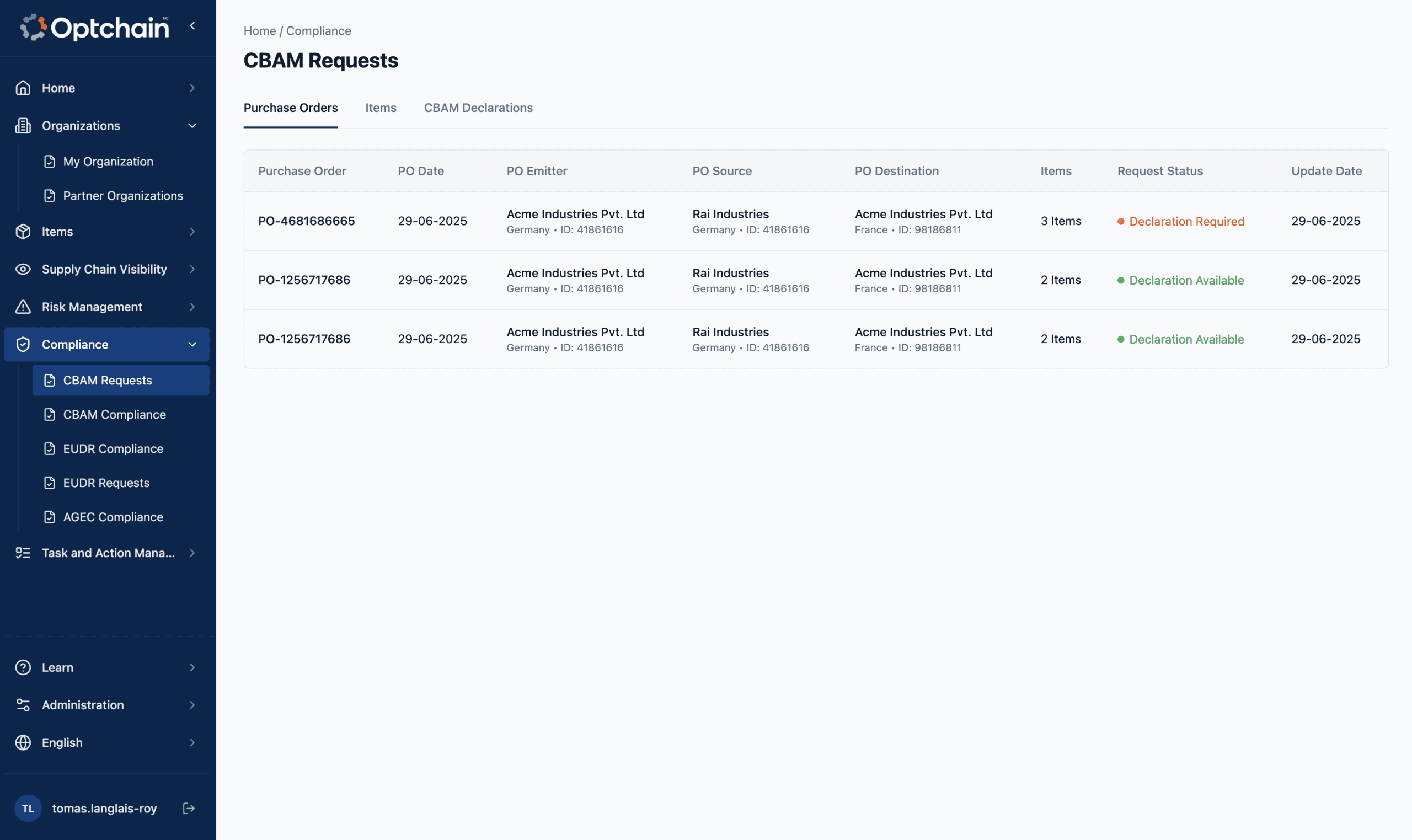

The EU Carbon Border Adjustment Mechanism (CBAM) requires EU importers to report embedded emissions for covered goods.
But accurate reporting depends on exporters and suppliers providing verified product-level and facility-level data.
THE REAL PROBLEM
The real challenge isn’t one regulation — it’s supplier data.
CBAM, deforestation compliance, forced labor due diligence, ESG reporting… Different frameworks, same operational bottleneck: you can’t manage compliance without trusted supplier data — and most supply chain data is fragmented, outdated, or unverifiable.
What happens in most organizations:
- Supplier data sits across procurement, ESG, operations, and third-party tools → fragmented data
- Teams rely on spreadsheets, emails, and recurring questionnaires → resource-intensive and increased risks
- Suppliers face constant, inconsistent requests → survey fatigue and low-quality responses
- Evidence is incomplete and hard to validate → weak audit defensibility
- Regulations evolve faster than internal capacity and systems → not scalable
Result: compliance becomes reactive, expensive, and risky — and teams rebuild processes regulation after regulation.