

Introduction

In today’s global economy, supply networks reach across continents, industries and cultures.
This guide distils the insights shared in a recent webinar about how organizations can successfully onboard and engage suppliers in this complex environment.
Large organizations face growing pressure from regulations, sustainability commitments and consumer expectations, yet they often struggle with fragmented systems, inconsistent data, limited visibility beyond Tier 1 and suppliers with very different digital capabilities.

This document answers three core questions:

  1. How do you onboard and engage suppliers across multi‑tier, multi‑region supply chains?
  2. What are the biggest challenges and how can they be addressed?
  3. What must leaders prioritize between now and 2030 to stay ahead?
BLOG_Successfully Onboarding and Engaging Your Suppliers in 2026_261788965_IMG2_800x530

The New Reality of Multi‑Tier, Multi‑Region Supply Chains

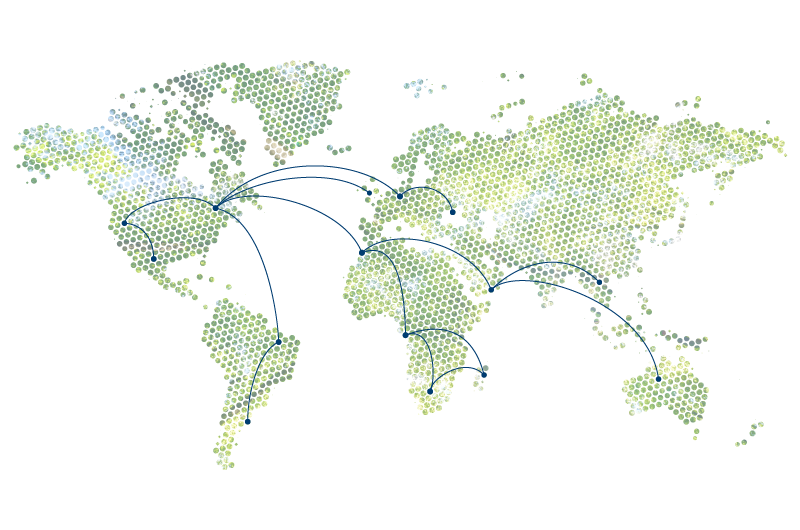
Global supply chains are no longer linear; they are dynamic ecosystems spanning continents and regulatory environments. To ensure compliance and transparency, companies must go beyond knowing their Tier 1 suppliers. They need deep visibility into upstream tiers where most of the risk lies. This requires tracing materials back to their origin, verifying geolocation data, ensuring compliance with environmental and social standards and reacting in real time to disruptions.

Without effective onboarding, supply chain initiatives fail at the first step. Suppliers must be brought into compliance workflows quickly, equipped to submit the right data (such as geolocation and ESG certificates) and understand why their participation is essential. Modern platforms like Optchain support this through configurable onboarding campaigns, multilingual portals and mobile apps for remote suppliers. Treating suppliers as partners rather than obstacles improves trust, data quality and engagement.

Common Pain Points for Large Organizations

The webinar highlighted recurring challenges experienced by large organizations when managing complex supply chains:

Lack of deep visibility

Most systems stop at Tier 1 suppliers. Tracing to origin requires structured master data and mechanisms to collect and validate upstream information.

Supplier non-responsiveness

Without incentives, escalation paths or managed onboarding, suppliers delay or fail to submit data.

Manual processes at scale

Reliance on spreadsheets and manual risk checks becomes unsustainable across regions and regulations.

Technology misalignment

Legacy systems are not API-ready or mobile-compatible, and fully custom solutions are costly. Off-the-shelf tools often lack flexibility.

Addressing these pain points requires both technological and organizational change. Companies need platforms that are API-ready, mobile-first and configurable,
plus a shift in mindset from control to collaboration.

Digital Maturity Is Not Linear

One of the biggest myths of digital transformation is that all partners evolve at the same pace. In reality, suppliers sit at very different points on the digitalization spectrum—from paper‑based operations to fully API‑integrated systems. Recognizing this variation is essential for building resilient and inclusive frameworks.
Optchain addresses this diversity by offering multiple data‑intake methods: web forms, Excel/CSV uploads, secure APIs and document uploads. This ensures every supplier can participate without needing to transform their operations overnight. The goal is to meet partners where they are and support them as they advance.

Designing Flexible Onboarding Pathways

Effective onboarding must adapt to different supplier maturity levels without creating parallel systems. The key is to design pathways that are flexible and supportive:

  • Multiple entry points: Suppliers can join through self‑registration, campaign‑based invitations or direct API integration, depending on their maturity.
  • Support throughout the process: Training videos, multilingual materials and a ticketing system help suppliers move forward at their own pace.
  • Configurable workflows: Timeframes, escalation rules and data formats can be tailored by supplier segment or region.

This approach enables suppliers of all sizes—from rural cooperatives to high‑tech producers—to deliver the data needed for compliance, risk assessment and sustainability tracking.

accountant showing an audit of documents with a magnifying glass

Including Smallholders and Low‑Maturity Partners

Excluding smallholders and low‑tech partners is both an ethical and operational risk. To ensure inclusivity, organizations must provide mobile‑friendly, low‑bandwidth platforms that allow suppliers to submit data even in constrained environments. Suppliers can upload documents directly from mobile devices—photos of invoices or GPS coordinates—without complex tools. Write‑only options reduce concerns about mistakes, while managed services and proxy onboarding allow support teams to assist directly. Digitized partners can also declare on behalf of smallholders, ensuring no one is left behind.

Building Interoperability: Multi‑Tenant Platforms and Breaking Silos

Modern supply chains consist of numerous systems—ERP, logistics, compliance and sustainability tools—none of which traditionally talk to each other. Interoperability is therefore a critical foundation for operational success and supplier engagement. Multi‑tenant architecture enables each company to operate in its own secure environment while connecting to a broader ecosystem. This allows data to be shared securely across partners without duplicating environments, and suppliers can interact with multiple customers through a single interface.

Breaking the silos involves:

  • Standard APIs and data models: Sharing master data (supplier profiles, items, geolocation) through APIs enables real‑time synchronization with ERPs and warehouse management systems.
  • Ready‑made connectors: Integrations with common platforms such as SAP or Bureau Veritas reduce the need for custom development and allow suppliers to reuse data across customers.
  • Common standards: Adopting open standards like OpenAPI and GS1 ensures each system speaks the same language and simplifies traceability.

Without interoperability, suppliers must re‑enter data multiple times, leading to fatigue, inconsistent records and compliance risks.

Springtime,Forest,With,Setting,Sun,Shining,Through,Leaves,And,Branches.

A Scalable, Inclusive Engagement Framework

To move beyond one‑off projects, organizations need a scalable, inclusive model for supplier engagement. This model should:

  • Offer multi‑channel onboarding—from API integrations for high‑maturity partners to simple Excel uploads or mobile forms for smallholders.
  • Provide role‑based user management so suppliers can delegate tasks internally and across regions.
  • Deliver localized interfaces and training content to support multilingual and low‑maturity users.
  • Harmonize onboarding flows and questionnaires while respecting each supplier’s operational reality.

Leveraging Partnerships and Ecosystem Thinking

Full traceability and compliance cannot be achieved alone. Companies must balance building internal capabilities with leveraging external partners. Strategic partnerships with auditors, satellite data providers, NGOs and local champions provide trusted, on‑the‑ground and data‑driven insights. Seamless third‑party integrations make it easy to connect with ERP systems, deforestation monitoring tools and government registries. Multi‑tenant infrastructure ensures suppliers only need to onboard once to work with multiple customers, reducing fatigue and duplication. This ecosystem mindset maintains internal control over data and standards while enabling external collaboration for scalability and resilience.

Real‑World Case Studies: Success and Failure

The session shared contrasting case studies to illustrate the impact of harmonized engagement:

  • Success: A palm oil supplier in Southeast Asia onboarded once via CSV upload and mobile app support. Three buyers then requested data through the same portal, allowing the supplier to reuse information and feel supported rather than overwhelmed.
  • Failure: A European retailer sent five separate compliance requests to the same cocoa cooperative in West Africa, each with different formats and deadlines. Overload led to missed deadlines, inconsistent data and a false perception of risk. The lesson: harmonization and shared infrastructure prevent fatigue and improve data quality.

Local presence and cultural familiarity also play a critical role. Suppliers in Ghana, Brazil or Indonesia need timely help with tasks such as document uploads or polygon mapping. Having regional support builds trust and reframes engagement as an opportunity rather than a burden.

The concept of sustainability in business centers, crowds of bus

Looking Ahead: Priorities for 2026–2030

The next five years will separate leaders from laggards. Supply chains are being reshaped by regulation, climate imperatives, digital transformation and geopolitical uncertainty. To stay ahead between 2026 and 2030, leaders must shift from reactive compliance to proactive ecosystem orchestration.

The supply chains of tomorrow are being built today. Strategic investments in inclusivity, interoperability, intelligence and resilience will deliver agility, brand trust and regulatory advantage. Those who wait will find themselves chasing data and scrambling for compliance in ecosystems they never truly owned. Now is the time to design supply chains not just for visibility but for velocity, verifiability and value.

Conclusion and Call to Action

Supply chain leaders are defined not by how much data they collect, but by how effectively they orchestrate ecosystems, enable supplier onboarding and adapt to constant change. Supplier engagement is no longer a static, Tier‑1 process; it is a dynamic, multi‑tier challenge where digital maturity varies and speed of response is a competitive advantage.

Leaders of 2030 are already building today.

Invest now in:

  1. modular platforms,
  2. adaptive processes,
  3. long‑term partnerships that empower your suppliers.

Get in touch to assess your supplier visibility maturity.